

When dealing with property sales or purchases in Dubai, understanding the legal steps is very important. A Memorandum of Understanding (MoU) plays a key role in this process. The MOU in Dubai real estate market works as a legal document that defines the terms agreed upon by both buyer and seller before completing a deal.
According to the sources, the emirate of Dubai recorded over 150,000 real estate transactions worth AED 498 billion in the first nine months of 2025, and clear agreements like MoUs are important for maintaining trust in such a large market.
A property MoU in Dubai ensures that both parties share the same understanding of the deal. It outlines the agreed price, payment schedule, and other important details. This document helps reduce disputes and gives both sides confidence before signing the final sale agreement. Here is everything you need to know about MoU in Dubai real estate.
What is MOU in Dubai Real Estate? Dubai Land Department Form F
An MoU works as an initial agreement between the buyer and the seller. It lists the main terms and conditions of the property deal. This document helps both sides agree on important points before moving to formal contracts or negotiations.
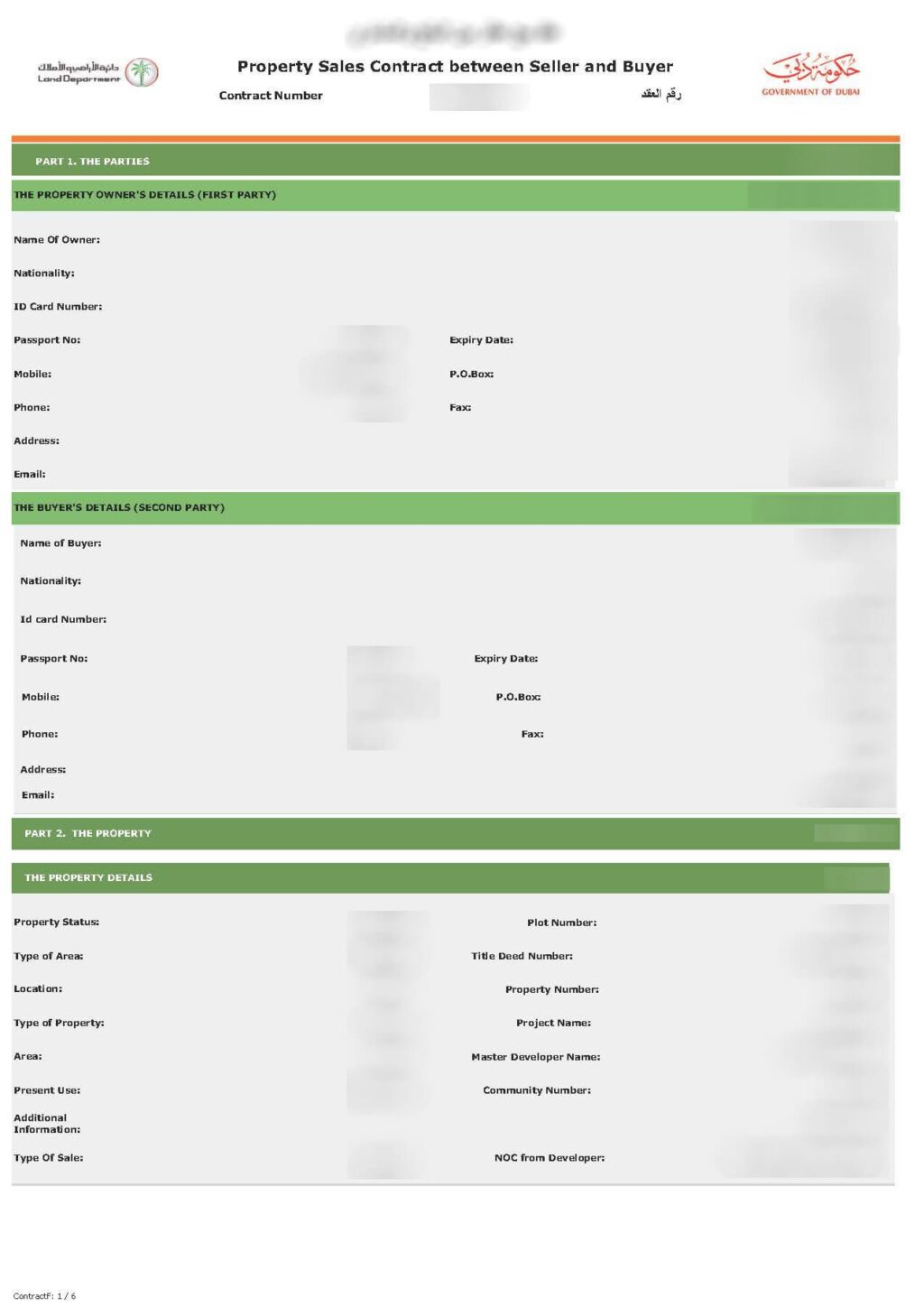
The MoU, also called Form F, is a mandatory form issued by RERA (Real Estate Regulatory Authority). It is available on the official website of the Dubai Land Department (DLD).
Form F includes essential details about the property transaction and the roles of all involved parties. The document must always come from RERA Dubai to ensure its validity.
Once the MoU is prepared, every stakeholder must sign it. This confirms the agreement’s authenticity. After all signatures are in place, both parties have 30 days to complete the documentation. If the deadline passes, the MoU expires, and a new one must be issued.
Steps After Signing the MoU
After signing the MoU, the next step is to obtain a No-Objection Certificate (NOC) from the property developer. Once the NOC is ready, all parties must visit the DLD office for ownership transfer and to receive the title deed.
Both the buyer and the seller must sign the MoU in front of a witness, usually the real estate agent, at the Registration Trustee’s office. The buyer must also pay a 10% security deposit to the Registration Trustee. The amount is returned after the property transfer is completed.
Importance of an MoU in Dubai Real Estate Transactions
The Memorandum of Understanding (MoU) plays a vital role in Dubai’s real estate sector. It creates a clear structure for property negotiations and helps both buyers and sellers protect their rights. The document also ensures that all terms are defined before the official sale contract.
1. Foundation for a Secure Property Deal
An MoU sets the base for a smooth and lawful property transaction. It highlights the main terms agreed upon by all parties and ensures that everyone understands their obligations. The document also helps maintain transparency, reducing confusion during the deal.
The MoU ensures that the transaction remains legally sound and organized by outlining the process from initial talks to the final agreement. This step helps build trust among all parties involved in the property deal.
2. Effective Negotiation Through MoU
A proper MoU process supports compliance with Dubai’s real estate laws. It also ensures that communication stays open between buyers, sellers, and agents. Clear discussions during MoU preparation prevent disputes and speed up the completion of the transaction.
Each clause in the MoU must reflect mutual agreement. The document should list every responsibility clearly so that no confusion arises later.
What are the Advantages of a Property Purchase MoU in Dubai?
A Memorandum of Understanding (MoU) offers several benefits in Dubai real estate transactions.
1. Provides a Clear Framework
An MoU sets clear expectations for both the buyer and the seller. It explains responsibilities and terms of the transaction. This clarity reduces misunderstandings that could lead to conflicts.
2. Protects Rights and Interests
The document safeguards the interests of all parties involved. It records details like the purchase price, payment plan, and other conditions. Such protection is important in real estate deals because they involve large amounts of money.
3. Makes Negotiations Easier
An MoU simplifies the negotiation and sale process. With all main terms listed upfront, parties can focus on completing the deal rather than negotiating basic points. This saves time and reduces complications.
4. Builds Trust Between Parties
Having an MoU shows commitment from both sides. It demonstrates willingness to follow fair terms and creates a cooperative environment. This helps maintain a positive relationship throughout the transaction.
Key Components of a Property MoU in Dubai
A strong Memorandum of Understanding (MoU) in Dubai real estate should cover several important elements. These ensure the document is clear and effective.
Important Elements
- Identification of Parties: List the names and contact details of the buyer, seller, and any agents or brokers.
- Property Details: Include the address, size, and special features of the property.
- MoU Deposit: The buyer pays at least a 10% security deposit when signing the MoU.
- Agreed Purchase Price: State the final price of the property and any related conditions.
- Payment Terms: Include the schedule for payments, including deposit amounts and due dates.
- Timelines and Deadlines: Set key dates, such as signing the final contract and property transfer.
- Contingencies and Conditions: Mention conditions that must be met before the deal proceeds, like financing approval or inspections.
- Obligations and Responsibilities: Clarify duties of each party, such as property maintenance and providing documents.
- Signatures and Dates: All parties must sign and date the MoU to confirm agreement to the terms.
Key Points About a Property MoU in Dubai
Certain conditions must be met for an MoU in Dubai real estate to be valid and effective.
Language and Signatures
- The MoU must be written in English or Arabic.
- All parties involved must sign the document.
Essential Information
- Include the signing date and the names, addresses, and contacts of all parties.
Legal Terms and Responsibilities
- Clearly state the laws that govern the contract.
- Define the rights and duties of each party.
Record Keeping
- Each party should keep a copy of the MoU.
- Copies help resolve disputes if obligations are not met.
Understanding the MoU
- Both parties must fully read and understand the MoU before signing.
- Awareness of the document ensures smooth and secure transactions.
Sample Memorandum of Understanding (MOU) in Dubai—Form F
Frequently Asked Questions
What is the Difference Between an MoU in Dubai and a Sale Agreement?
Many people mistake an MoU for a sale agreement. A sale agreement is a legally binding contract that finalizes the sale and transfer of ownership. An MoU, however, only sets out the agreed terms before the final sale. It is not legally binding but serves as a clear reference for both parties.
What is the Role of Legal Guidance in MoU Preparation?
Engaging a licensed real estate lawyer at the start of the process adds great value. The lawyer explains the property laws in Dubai and ensures that all terms meet legal standards. Once that is done, both sides should review and agree on every part of the MoU before signing it.
How to Create an MOU in Dubai?
Essential Components of a Property MOU in Dubai:
- Identification of the Parties: Clearly specify the individuals or entities involved in the agreement.
- Property Details: Provide a detailed description of the property in question.
- MOU Deposit: State any deposit required to formalize the memorandum.
- Purchase Price: Outline the agreed-upon price for the property.
- Payment Terms: Define the schedule and conditions for payments.
- Roles and Responsibilities: Clarify the obligations of each party.
- Timelines: Set key deadlines and milestones.
- Signatures and Date: Ensure the document is signed and dated by all parties.
Is MOU legally binding in the UAE?
Typically, an MOU is not legally binding and mainly serves to express intentions and guide negotiations. However, under UAE law, specific clauses, such as those related to confidentiality or exclusivity, can be enforceable if clearly written. In contrast, a formal contract is fully binding and can be enforced in UAE courts.