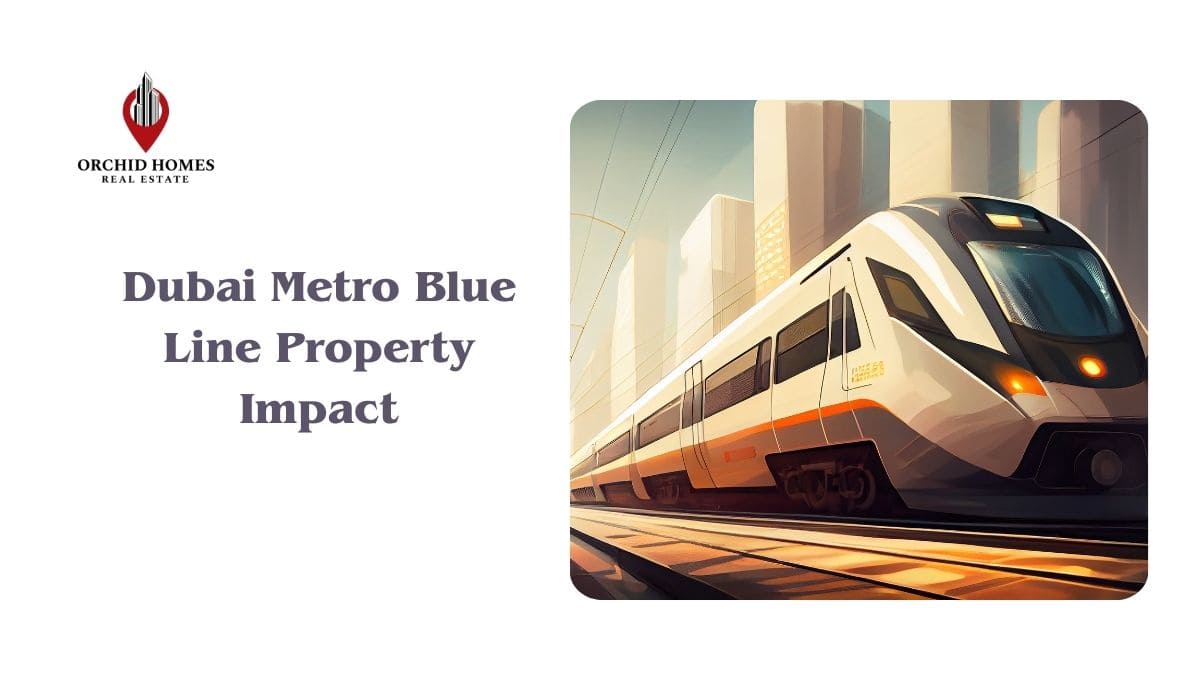
The Dubai Metro Blue Line has started a new chapter in the city’s real estate growth. The project strengthens Dubai’s long-term vision for integrated urban development. Investors, residents, and developers now study the line’s influence because it reshapes demand patterns across several districts. The project showcases engineering excellence, economic strength, and community-oriented planning.
The Blue Line already generates interest from buyers and tenants who value strong transport links. Many districts expect value surges because the line connects major residential and commercial zones. The project also supports Dubai’s goal of creating self-sustained communities where comfort, connectivity, and quality of life complement each other.
Why the Dubai Metro Blue Line Matters in Today’s Market
A strategic AED 18 billion investment powers the Blue Line. The extension covers around 30 kilometers and links Al Jaddaf with Al Ruwayyah 3, as well as Al Rashidiya with International City through Mirdif and Al Warqa. Industry leaders expect significant real estate gains because metro access often influences property appreciation.
The government expects the line to ease congestion by 20%. That benefit alone strengthens its importance for daily commuters. The Blue Line also supports Dubai’s 2040 Urban Master Plan, which highlights sustainable transport, green mobility, and compact community formations.
Many investors now study the Dubai Metro Blue Line property impact, and interest increases each month. The project does more than improve mobility. It creates a foundation for value growth near stations and encourages new development activity in emerging zones.
Engineering Achievements and Strategic Connectivity
The Blue Line features two major sections. The first covers twenty-one kilometers and connects ten stations between Al Jaddaf and Al Ruwayyah 3. It links Dubai Festival City, Dubai Creek Harbour, Ras Al Khor, International City, Dubai Silicon Oasis, and Dubai Academic City. The second section expands nine kilometers and links Al Rashidiya with International City through Mirdif and Al Warqa.
These engineering achievements strengthen Dubai’s global reputation. A 1300-meter viaduct crosses Dubai Creek. The world’s tallest metro station stands seventy-four meters high at Dubai Creek Harbour. The project also features the largest underground station at International City 1.
Completion is scheduled for September 2029. Daily capacity will reach 320,000 passengers by 2040. That capacity supports the long-term movement of residents between nine major districts. Seamless transfers at Creek, Centrepoint, and International City 1 give the network full integration. Every interchange supports access to Etihad Rail and several bus terminals. Bike routes, e-scooter lanes, and accessible parking enhance the line’s sustainability profile.
Dubai Rental Market Growth Around Blue Line Communities
Districts near the Blue Line show strong rental demand. Academic City leads all areas with a 43% rise in rental rates. Studio apartments now command around AED 60,000 per year.
- Dubai Creek Harbour follows with a 30% rise
- Al Warqa and Silicon Oasis recorded increases of 28%
- International City clusters gained 22%
- Ras Al Khor Industrial Area rose 21%
- Mirdif and Dubai Festival City gained 15%
The pattern reflects long-term trends. Properties near metro stations historically show higher rental growth than districts without metro access. Many analysts expect rental growth near Blue Line stations to rise an additional 30% by 2029. Buyers and tenants value time savings, convenience, and predictable commute times.
Property Value Appreciation Linked With Metro Access
Sales data support the rising interest in these communities. Analysts forecast value appreciation between ten and twenty-five percent for properties near Blue Line stations. The trend resembles the surge witnessed after the Red Line opened in 2009.
Dubai recorded AED 120 billion in residential sales during the first quarter of 2025. That result reflects an eighteen percent year-on-year rise. Metro-connected districts rose 5.6% in value, with villas gaining 7.9% and apartments gaining 4.2%.
Al Warqa, Academic City, and the zones along Sheikh Mohammed bin Zayed Road attract strong demand for land and mid-market housing. These areas once served as peripheral suburbs. They now gain value because the Blue Line boosts their accessibility.
Buyers who study International City property appreciation see clear growth potential. Infrastructure upgrades and direct metro access strengthen these clusters and attract long-term residents. Investors who study investing in Dubai Silicon Oasis share similar views about growth because Silicon Oasis benefits from a strong tech ecosystem and improved transport links.
Investment Landscape Along the Blue Line Dubai
Demand for off-plan projects near Blue Line stations grows rapidly. More than one hundred new projects have appeared along the corridor. Several developers offer flexible payment plans and competitive starting prices.
Top projects include Emaar’s Green Gate and Ellington’s Hillgate. These developments attract investors because they promise strong rental yields and stable long-term occupancy. Many undervalued districts gain new attention as well. International City, Ras Al Khor, and Dubai Silicon Oasis show strong future potential because they sit between major commercial and educational zones.
The government expects the Blue Line to generate AED 56.5 billion in benefits by 2040. These benefits come from reduced commuting time, lower fuel use, and improved environmental quality. The corridor also supports economic diversification because it connects academic, residential, industrial, and creative districts.
Explore top off-plan projects in Dubai in 2026
Exploring Key Communities along the Blue Line Corridor
Investors study several core districts because each zone holds unique strengths. The table below outlines the primary areas and their relevance.
Key Areas Along the Blue Line
| Area | Core Strength | Reason for Investor Interest |
| Dubai South | Airport and Expo City access | Strong growth and future aviation hub |
| Dubai Silicon Oasis | Tech ecosystem | High demand from professionals |
| Mirdif | Established family community | Good schools and quality living |
| International City | Affordable housing | Strong rental demand |
| Dubai Creek Harbour | Luxury waterfront community | Tallest station and prime amenities |
1. Dubai South: A New Investment Powerhouse
Dubai South benefits from a major surge in activity. The Blue Line links the district with Expo City Dubai and Al Maktoum International Airport. That connection strengthens the district’s long-term role as a global aviation hub.
Price growth already reached 25% in 2025. Rental yields stay within 6%-7%. Analysts expect 10%-25% appreciation by 2029. The district supports a balanced mix of residential, commercial, and logistics zones.
The airport expansion boosts residential demand because thousands of employees plan long-term residence there. Commercial complexes also increase in value because companies value an airport-centric ecosystem.
2. Dubai Silicon Oasis: A Tech-Driven Growth Hub
Dubai Silicon Oasis remains one of the most promising mid-market communities. Strong tech infrastructure attracts start-ups, engineers, and digital professionals. The Blue Line strengthens the district because direct metro access adds convenience for workers.
Property prices in Silicon Oasis rose between 50% and 80% in 2025. Rental yields average around 6.5%. Many investors study investing in Dubai Silicon Oasis because the district shows consistent absorption rates. Affordable entry prices also appeal to young buyers and long-term tenants.
The area features academic institutions, office spaces, innovation labs, data centers, and a growing number of parks and community facilities. These elements support future price growth because residents seek districts that combine work and lifestyle convenience.
3. Mirdif: A Family-Focused Suburban Community
Mirdif provides tree-lined streets, parks, and well-rated schools. Families value its peaceful environment and community-oriented lifestyle. The Blue Line improves access to central Dubai and reduces commute time for residents.
Price growth reached 25% in 2025. Rental yields stand around 6%. Developers continue new construction because demand increases steadily. The district appeals to families who prefer villa communities without premium price tags.
Metro access also raises demand for townhouses and mid-range apartments. Mirdif’s balanced lifestyle and location near Dubai International Airport strengthen its future potential.
Explore differences between villas and townhouses in Dubai
4. International City: Strong Value and High Occupancy
International City remains one of Dubai’s most active and affordable residential zones. Investors who follow International City property appreciation recognize that metro access pushes demand upward. The district already recorded a 22% rise in rental prices after the Blue Line announcement.
International City attracts budget-conscious residents, students, and small business owners. The area features diverse eateries, retail outlets, and supermarkets that support daily living. The upcoming largest underground station increases its appeal because passengers gain direct access to the wider metro network.
Occupancy rates remain high because many residents prefer affordable communities with strong transport links. New developments in Warsan and the surrounding clusters also benefit from this momentum.
5. Dubai Creek Harbour: Prestige, Waterfront Living, and Metro Connectivity
Dubai Creek Harbour blends luxury living with environmental beauty. The district features waterfront promenades, retail areas, parks, and the iconic tower overlooking the Creek. The Blue Line’s tallest station stands here and strengthens long-term property value.
Rental yields often reach 7%. Investors appreciate the combination of luxury apartments, scenic views, and a strong developer reputation. The district attracts global buyers who seek premium living with high capital appreciation potential.
The line improves access between Creek Harbour and Dubai South, which benefits professionals who work near the airport or Expo City Dubai.
Understanding the Metro-Driven Investment Strategy
Several guidelines help investors choose the right properties near the Blue Line. Location within one kilometer of a station remains the strongest factor. Metro proximity increases property value, rental demand, and long-term liquidity. Each station supports retail growth because foot traffic increases significantly.
Investors also focus on escrow-protected off-plan projects because these developments limit risk. Many off-plan projects near Blue Line stations use flexible 50-40 payment plans. Golden Visa eligibility adds further value because investors can secure residency with a two-million-dirham purchase.
Many investors build mixed portfolios that include commercial units and residential apartments. Commercial units benefit from commuter traffic, while residential units provide stable annual yields.
The Dubai Metro Blue Line property impact influences these decisions because long-term growth depends on transport access. Analysts continue discussions on the Dubai Metro Blue Line property impact because it acts as a central driver of demand in mid-market districts.
How the Blue Line Supports Dubai’s Vision for 2040
The Blue Line strengthens the “20-minute city” model. Residents gain access to work, schools, health care, retail, and parks within short travel times. This model favors compact communities with mixed-use layouts and high walkability.
Population projections show a rise toward 5.8 million residents by 2040. The Blue Line prepares the city for this growth. The line boosts social development because it links educational zones, business districts, and family neighborhoods.
Transport upgrades continue across Dubai. The network will gain 58 new stations by 2025. These expansions enhance the value of areas around the Blue Line because each connection increases accessibility.
Final Professional Insights on the Blue Line’s Long-Term Influence
The Blue Line strengthens long-term real estate value across multiple districts. Properties near metro stations often outperform others because tenants prefer convenience and predictable transit times. Investors who target metro-connected communities benefit from consistent rental income and higher occupancy rates.
Emerging districts like Silicon Oasis, Dubai South, and International City show strong potential. Investors who study investing in Dubai Silicon Oasis often discover stable growth. Residents who follow International City property appreciation find strong returns at accessible price points.
Dubai continues to create a modern, efficient, and sustainable city. The Blue Line represents a powerful catalyst that aligns with this vision. Investors who secure opportunities now gain long-term advantages because the line reshapes the entire real estate landscape.
FAQs
How will the Dubai Metro Blue Line impact property prices?
Properties close to Blue Line stations could rise between 10% and 25% because stronger connectivity fuels higher demand in districts such as Mirdif, Academic City, and Silicon Oasis.
Which areas will see the highest rental growth from the Blue Line?
Academic City, Dubai Creek Harbour, and Ras Al Khor lead current rental growth with increases that reach 43% because enhanced metro access improves comfort and livability.
Is it worth investing near the Blue Line in 2025?
More than one hundred new projects and major infrastructure upgrades now shape metro-linked districts, and these areas offer strong capital gains and solid rental yields in 2025 and the years ahead.