
Dubai attracts global investors due to strong property regulations and rapid development growth. Off-plan properties in Dubai remain popular among international buyers seeking early entry advantages. These transactions involve contracts (sales purchase agreement) signed before project completion and require careful review.
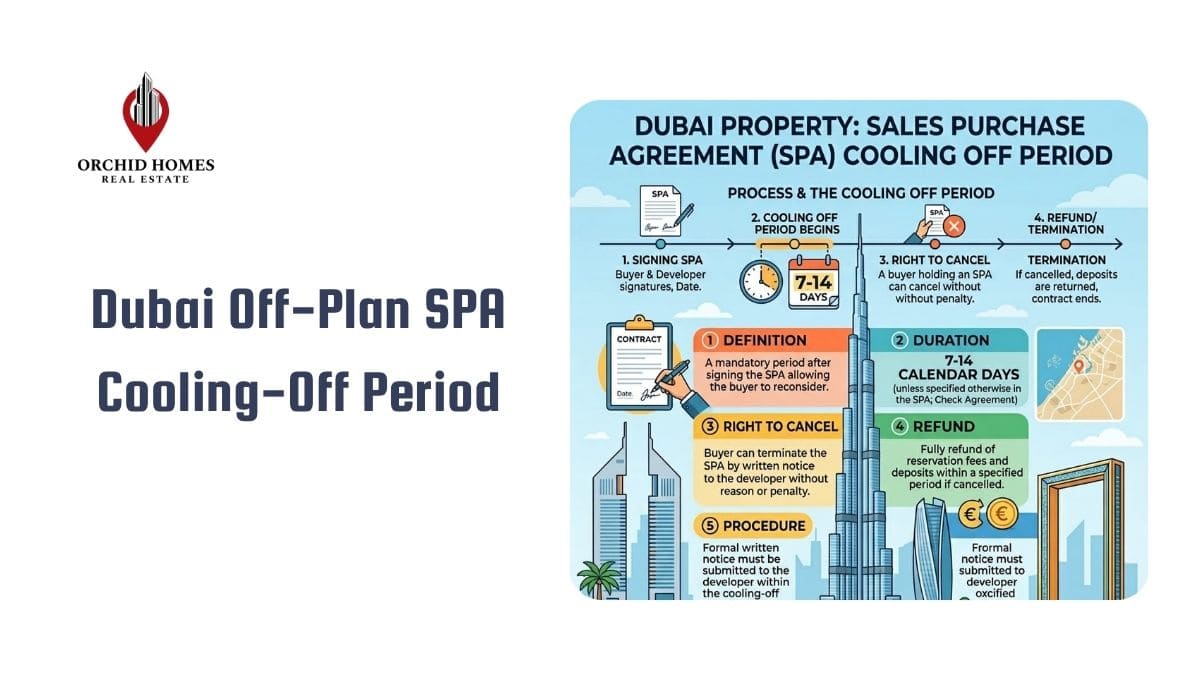
One notable aspect of this agreement is the cooling off period. The Dubai off plan SPA cooling off period gives buyers short time after signing agreement. Buyers use this stage to reassess financial plans and contract obligations with clarity. This period reduces rushed decisions and supports better investment evaluation.
Many investors review developer reputation and payment schedules during this phase. Proper understanding improves confidence during early property commitments in Dubai market. The following is a detailed guide on the off-plan SPA cooling-off period in Dubai.
What is the Cooling-Off Period in a Dubai SPA?
The cooling-off period in a Sale and Purchase Agreement gives buyers a limited time to reconsider an off-plan property purchase. Buyers can review terms after signing the contract.
This period supports structured decision-making in early investment stages. It also reflects a regulatory balance between developers and buyers.
The SPA cooling-off period UAE plays an important role in transaction clarity. It helps reduce rushed commitments in property deals.
Definition and Purpose under DLD Regulations
Dubai Land Department regulates property transactions across the emirate. These rules define responsibilities for both buyers and developers.
The cooling-off system gives buyers time to review SPA terms after signing. This improves contract awareness and reduces early disputes.
Developers must follow DLD guidelines during this stage. Buyers gain clarity on rights and obligations before final commitment.
Standard Duration: 7 to 14 Working Days
Most off-plan contracts include a cooling-off window of seven to fourteen working days. Developers clearly mention this duration inside the SPA.
Buyers must act within this short timeframe. Delay can reduce cancellation rights under the contract. This limited duration encourages quick but careful review of investment decisions.
Why the Cooling-Off Period Matters for Investors
Investors face pressure during early property discussions. Sales urgency and limited availability often influence decisions. Cooling-off rights help reduce rushed commitments. This period creates space for rational review.
1. Protection Against High-Pressure Sales
Sales teams often highlight limited units and fast price changes. Buyers may feel pressure during negotiations.
Cooling-off rights allow buyers to step back after signing and reduce emotional decision-making. This structure improves buyer confidence in early investment stages.
2. Time for Final Due Diligence & Financing
Investors often complete financial checks after signing the SPA. Banks may require extra time for mortgage approval.
Cooling-off time helps confirm financial readiness. Buyers can also review the developer background and project progress. This stage improves decision accuracy and reduces financial stress.
3. DLD Buyer Protection Framework
The DLD buyer protection system supports fairness in property transactions. It ensures clear rules for both sides.
Cooling-off rules form part of this protection system. Buyers gain structured rights during early contract stages.
How to Exercise Your Right to Cancel an Off-Plan SPA
Buyers must follow a clear process to cancel a sales purchase agreement in Dubai. Proper steps ensure smoother handling of requests.
Developers require formal communication and valid documentation. Timing plays a critical role in this process.
1. Reviewing the Termination Clause in Your Contract
Every SPA includes a termination section. Buyers must read this clause carefully before action. This section explains cancellation rights and possible deductions. Developers may apply specific conditions based on the progress stage. Contract clarity helps avoid disputes during cancellation.
2. Formal Notification Requirements for Developers
Buyers must send a written cancellation notice to the developer. An email or a registered letter often serves as valid proof.
The notice must clearly state cancellation intent. Developers usually respond within a defined timeframe. Proper communication reduces delays and confusion.
3. Refund Timelines and Administrative Fees
Refund processing depends on the project stage and contract terms. Developers may deduct administrative charges.
Some contracts include non-refundable booking fees. Refund timelines vary across projects. Buyers should track official responses closely.
Cancel Off-Plan Property Dubai Process
The process to cancel off-plan property Dubai depends on SPA terms and developer policies. Buyers must follow each step carefully. Incorrect procedure may delay refund approval or increase deductions.
Legal Consequences after the Cooling-Off Period Expires
Legal obligations become stronger after the cooling-off window ends. Buyers enter a binding contract phase. Exit options become limited at this stage, and financial exposure increases significantly.
1. The Binding Nature of Oqood Registration
Oqood registration records off-plan ownership with authorities. This confirms the buyer’s commitment officially.
Once registration completes, cancellation becomes more complex. Buyers must meet strict legal conditions. This system strengthens contract enforcement.
2. RERA Penalties for Buyer Default (25% to 40% Thresholds)
Developers may apply penalties after contract breach. Charges often range from 25% to 40% of property value.
These penalties depend on construction progress and contract terms. The system discourages late cancellations and protects project stability.
Dubai Real Estate Law 2026 Updates
Dubai real estate law 2026 introduces updated clarity for off-plan transactions. It strengthens transparency in contract enforcement. These updates support better regulation between buyers and developers. They also improve dispute resolution processes.
RERA Off-Plan Cancellation Rules
RERA off-plan cancellation rules define conditions for termination after contract activation. These rules protect both parties during disputes. Buyers must meet strict legal requirements for valid cancellation requests.
Exceptions: When Can You Still Cancel Post-Cooling Off?
Some situations allow cancellation after the initial window closes. These cases depend on developer performance or contract breach. Authorities review each case based on evidence and documentation.
1. Developer Delays Beyond the Grace Period
Developers must follow agreed construction timelines. Long delays beyond grace periods may trigger cancellation rights.
Buyers can raise formal complaints in such cases. Authorities may review project status. This protects buyers from extended project delays.
2. Material Changes to Unit Specifications
Developers must deliver units according to contract terms. Major changes in layout or size affect buyer rights.
Buyers can challenge significant variations in specifications. Cancellation may apply in valid cases. Clear documentation strengthens claims during disputes.
Conclusion: Making a Confident Investment Move
The Dubai real estate market offers structured legal protection for investors. Buyers benefit from clear rules and regulated processes.
The Dubai off plan SPA cooling off period helps investors review contracts before full commitment. This stage improves financial planning and reduces rushed decisions. Investors should always understand SPA terms before signing. Careful review improves long-term investment outcomes.
The Dubai off plan SPA cooling off period remains a key protection tool for buyers in the early stages. It supports informed and confident decision-making. Strong awareness of rules helps investors avoid unnecessary risk. Careful planning leads to better property investment results.
FAQs
What is a cooling-off period for off-plan property in Dubai?
It is a legally defined window (usually 7–14 days) after signing a Sales Purchase Agreement (SPA) during which a buyer can withdraw from the deal without incurring heavy financial penalties or losing their full deposit.
How long is the cooling-off period for a Dubai SPA in 2026?
While it varies by contract, the standard cooling-off period in Dubai is typically 7 working days. However, many new 2025/2026 regulations and developer policies now offer up to 14 days to align with international buyer protection standards.
Do I get my full deposit back if I cancel during the cooling-off period?
Yes, in most cases, you are entitled to a refund of your deposit. However, developers are often permitted to deduct a small, reasonable administrative or processing fee as specified in the reservation agreement.
Does the cooling-off period include weekends and public holidays?
No. In Dubai, the period is calculated in working days. Since the UAE weekend is Saturday-Sunday, these days, along with any official public holidays, are excluded from the countdown.
Can I cancel an off-plan SPA after the cooling-off period has ended?
Once the period expires, the contract becomes legally binding. Cancellation is then only possible through mutual agreement, developer breach (like construction delays), or by forfeiting a percentage of the property value (up to 40%) as per RERA law.
Does every developer in Dubai offer a cooling-off period?
While most reputable developers include it as a standard consumer protection measure, it is not “automatic” in every single private contract. You must verify that the clause exists in your specific SPA before signing.
What is the difference between a reservation agreement and an SPA?
A reservation agreement is an initial document to hold the unit, while the SPA is the final, detailed legal contract registered with the Dubai Land Department (DLD). The cooling-off period typically begins upon the signing of the SPA.
Can a developer cancel the deal during the cooling-off period?
The cooling-off period is primarily a buyer protection tool. For a developer to cancel, they must usually cite specific grounds such as a failure to meet the initial payment schedule or a failure to provide required KYC documentation.