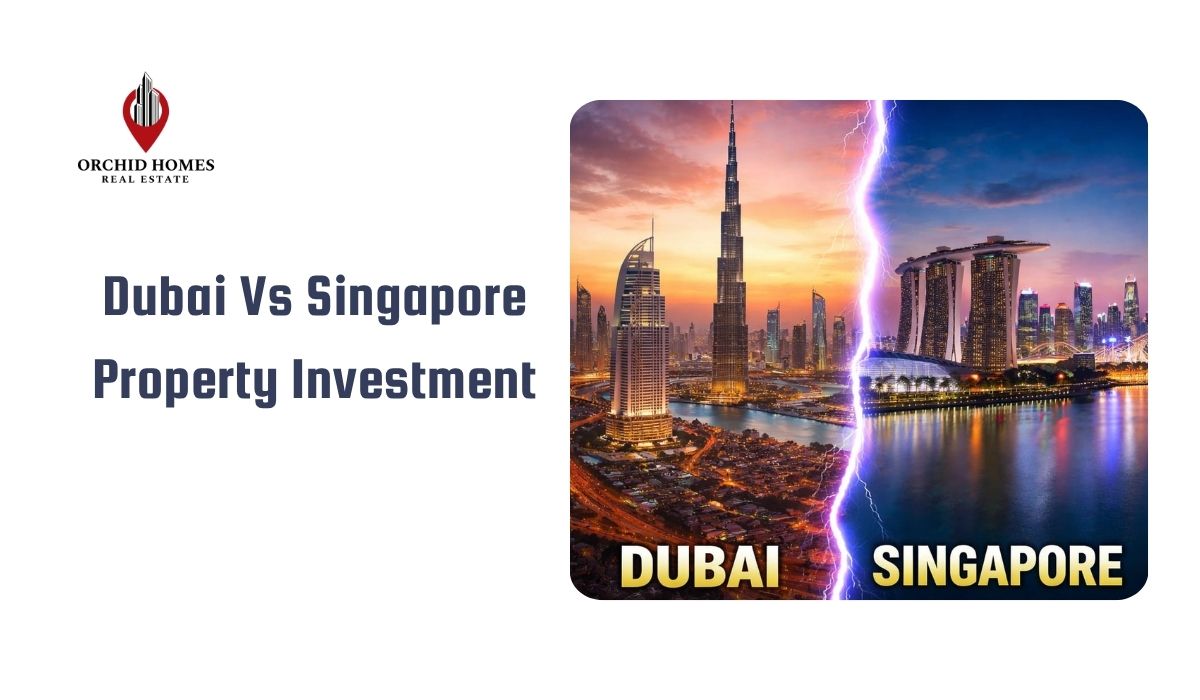
Dubai and Singapore stand among the top global hubs for property investment today. Each city offers stability, strong governance, and a clear long-term growth direction. Dubai attracts attention with high returns and tax advantages. Singapore builds trust through strict rules and steady market performance. A clear view of Dubai vs Singapore property investment helps investors align choices with their financial goals.
Dubai vs Singapore Property Market Overview
Both cities offer modern infrastructure and a strong economic appeal for investors worldwide. Market structures look similar, yet each city follows a distinct growth path.
1. Market Trends
Market performance reflects policy direction and long-term planning in both cities. Growth patterns differ due to regulation levels and investor demand across regions.
Dubai
Dubai’s property market has shown rapid expansion with strong investor activity in recent years. Total real estate investments crossed AED 680 billion during the 2025 growth cycle. Transaction values reached AED 917 billion, showing strong demand across property segments.
Singapore
Singapore’s market shows steady and controlled price growth over recent years. Residential prices increased by 3.3% during 2025 across major housing segments. Rental values also rose by 1.9% compared with the previous year’s performance.
2. Economic Indicators
Economic strength shapes real estate demand and long-term market confidence in both cities. Growth data highlights how each economy supports property sector expansion differently.
Dubai
Dubai recorded GDP growth of 4.7% during the recent economic period. The real estate sector expanded by 6.7% and contributed 8.2% to total GDP. Government plans focus strongly on property growth and urban expansion goals.
Singapore
Singapore achieved GDP growth of 4.8% during the same time period. The real estate sector contributed around 3.4% to the national economy structure. Policy frameworks guide market growth through strict planning and regulation systems.
3. Foreign Ownership
Ownership rules influence investor access and overall market attractiveness in each city. Regulations vary widely and affect entry strategies for international buyers.
Dubai
Foreign buyers can purchase property in designated freehold zones across the city. Popular areas include Palm Jumeirah, Dubai Marina, and Downtown Dubai districts. No extra property taxes or ownership limits apply to foreign investors here.
Singapore
Foreign buyers can purchase apartments and condominiums without major restrictions. Approval is required for landed homes under strict residential property regulations. A 60% additional buyer stamp duty increases the total investment cost significantly.
4. Infrastructure
Infrastructure quality plays a major role in shaping property demand and investor confidence. Both cities invest heavily in transport systems and urban development projects.
Dubai
Dubai International Airport handled over 95 million passengers in the recent annual data. Public transport includes metro, tram, buses, and taxis across expanding urban zones. Urban planning supports smart city goals and sustainable development initiatives.
Singapore
Singapore Changi Airport welcomed around 70 million passengers in the same period. MRT system and buses provide efficient and affordable transport options citywide. Sustainability remains a core focus in long-term infrastructure planning policies.
5. Taxation
Tax structure directly impacts net returns and long-term investment profitability in real estate. Each city follows a very different taxation approach for property owners.
Dubai
Dubai does not impose an annual property tax on residential or investment properties. This tax-free structure increases net rental yields and investor profitability levels. Such policies strengthen Dubai’s position in Dubai vs Singapore real estate investment comparisons.
Singapore
Singapore applies an annual property tax based on the estimated rental value of assets. Rates range from 0% to 32% for owner-occupied residential properties. Investment properties face higher tax rates between 12% and 36% annually.
6. Property Types
Property variety affects investor choice and portfolio diversification across different markets. Both cities offer modern housing options with distinct architectural styles.
Dubai
Dubai features high-rise towers, waterfront homes, and large villa communities. Apartments, penthouses, and serviced residences remain popular among investors. Luxury developments and iconic skyline projects define the overall property landscape.
Singapore
Singapore focuses on high-rise living with private condominiums and public housing. Low-rise apartments and limited luxury villas exist in selected prime locations. Strict land use policies shape the availability of different property types.
Final Thoughts
A balanced comparison of Dubai vs Singapore property investment highlights clear differences in strategy and returns. Dubai offers higher yields with fewer taxes and flexible ownership rules. Singapore provides stability through strict regulations and steady growth patterns.
The table below presents a clear summary of key differences between the two markets. This overview helps simplify the decision in any Dubai vs Singapore real estate investment strategy.
| Factor | Dubai | Singapore |
| Market Growth | Rapid growth with high transaction volumes and investor activity | Steady growth with controlled price increases and stable demand |
| GDP Contribution | Real estate contributes 8.2% to total GDP | Real estate contributes around 3.4% to total GDP |
| Foreign Ownership | Full ownership allowed in designated freehold areas | Restricted ownership with approval required for landed properties |
| Entry Costs | No additional property tax or major extra charges | 60% Additional Buyer’s Stamp Duty for foreign buyers |
| Taxation | No annual property tax on residential or investment properties | Annual property tax between 0% and 36% based on usage |
| Rental Yields | Generally higher rental yields across key areas | Lower but stable rental returns over time |
| Infrastructure | Strong and expanding transport and urban development systems | Highly efficient and well-integrated public infrastructure |
| Property Types | Wide range including villas, waterfront homes, and high-rise apartments | Focus on condominiums, apartments, and limited landed homes |
| Investment Style | Suitable for high-return and growth-focused strategies | Suitable for stability and long-term capital preservation |
FAQs
Which city offers better returns in Dubai vs Singapore property investment?
Dubai often delivers higher rental yields due to strong demand and zero property tax policies. Singapore offers lower but stable returns with less volatility. Investment choice depends on whether an investor prefers higher income potential or long-term capital stability.
Is Dubai or Singapore safer for real estate investment?
Singapore provides a highly regulated and transparent property market with consistent performance over time. Dubai also ensures investor protection but focuses more on growth and expansion. Investors seeking stability may prefer Singapore, while growth-focused buyers often choose Dubai.
What are the main costs in Dubai vs Singapore real estate investment?
Dubai has lower entry costs since it does not impose annual property taxes on investors. Singapore includes high upfront costs such as stamp duties and annual property taxes. These added expenses significantly increase the total investment amount in Singapore.