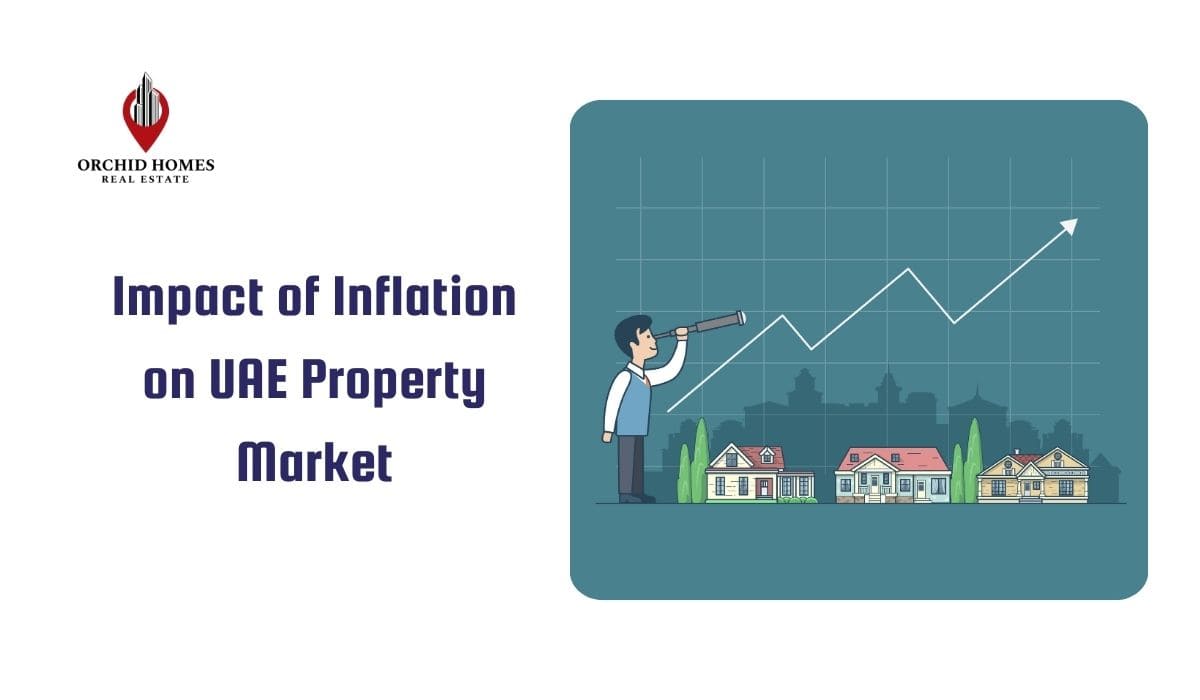
The impact of inflation on UAE property market attracts serious attention during 2026. Market analysts describe the current phase as a transition period after rapid post-pandemic expansion. Property demand surged between 2021 and 2024 due to foreign investment inflows and migration growth.
Market conditions now show signs of normalization across several property segments. Investors rely more on data-driven decisions rather than speculative activity. Developers also show greater caution while launching new projects across major emirates.
The UAE real estate market 2026 presents a more balanced environment compared with the previous boom years. Demand continues, yet price growth shows moderation in several residential communities. Analysts expect sustainable growth rather than dramatic spikes across most districts.
Economic Backdrop and Growth Expectations
Strong economic performance continues to support property activity across the federation. The International Monetary Fund expects real estate economic growth between 5% and 5.3% during 2026. Non-oil sectors contribute strongly to this expansion through tourism finance and trade.
The Central Bank of the United Arab Emirates also expects stable financial conditions throughout the year. Inflation remains lower than in several global economies despite rising commodity costs worldwide. Economic diversification strategies continue to strengthen investor confidence in the country.
Many analysts highlight resilience against global inflationary pressure as a major strength. Government spending supports infrastructure expansion across several emirates. Therefore, real estate remains closely linked with economic growth trends.
A Recalibration Year for the Market
Experts widely describe 2026 as a recalibration phase rather than a downturn year. Inflation affects construction expenses and buyer preferences, yet strong demand remains present. Developers continue to launch projects but focus heavily on quality and location advantages.
The impact of inflation on UAE property market appears through rising development costs and stricter investment decisions. Buyers now compare value more carefully across communities before purchasing property. Long-term residents also increase their presence within the ownership market.
Analysts still present an optimistic Dubai property price forecast 2026 across several prime districts. However, price growth rates remain slower compared with the extraordinary surge seen earlier. Balanced growth strengthens long-term stability within the national property ecosystem.
Inflation’s Direct Impact on Market Dynamics
Inflation influences construction activity through rising material prices and labor expenses. Contractors report higher costs for steel, concrete transportation, and imported building components. Industry consultants estimate a 3% to 4% increase during the year.
The UAE construction cost forecast 2026 reflects moderate but consistent price growth. Shortages of skilled labor also contribute to higher project budgets across the sector. Therefore, developers evaluate project feasibility more carefully before approving new launches.
Supply chain disruptions also influence the timing of large construction projects. Global shipping costs remain volatile despite improvements after earlier disruptions. Developers respond by securing long-term supplier agreements and alternative procurement strategies.
a. Tender Price Inflation and Developer Margins
Tender prices show gradual increases across residential and commercial construction projects. Contractors adjust pricing structures in response to higher operational expenses. These adjustments reduce profit margins for developers within certain mid-tier developments.
Several mid-market projects face slower launch schedules because developers seek financial certainty. Investors also evaluate risks more carefully before committing funds toward large developments. Market experts expect minor project delays within selected communities.
Premium developments experience fewer delays due to stronger investor demand and higher profit margins. High-net-worth investors continue to support luxury residential construction across waterfront districts. Demand stability offsets inflationary pressure within the premium segment.
b. Interest Rates and Mortgage Financing
Mortgage rates within the Emirates follow trends set by the United States Federal Reserve. Interest rate movements occur because the national currency maintains its dollar peg. Analysts expect a gradual easing during 2026 after global inflation pressures soften.
Financial institutions project mortgage rates around 6% during the year. The UAE mortgage rate predictions 2026 suggest improved affordability for many buyers. Therefore, first-time homeowners return actively to the ownership market.
Lower financing costs encourage end users rather than speculative investors. Banks also introduce new mortgage packages that target salaried residents and long-term expatriates. Strong financing support therefore sustains property demand despite inflationary conditions.
Segmented Performance: Winners vs. Laggards
a. Luxury Real Estate as a Strong Performer
Luxury real estate continues strong performance across Dubai and Abu Dhabi’s prime districts. High net worth migration remains one of the strongest drivers behind this trend. Wealthy investors relocate from Europe, Asia, and Russia due to tax advantages and lifestyle appeal.
Prime villas and branded residences experience strong buyer demand despite rising global prices. Limited land supply within premium waterfront districts strengthens the long-term value outlook. Luxury developments appear relatively protected from inflationary pressure.
The debate surrounding luxury vs mid-market real estate UAE highlights the growing gap between these segments. Luxury communities record stronger price growth compared with mid-tier residential areas. International buyers often prioritize lifestyle quality and investment security within these districts.
Market consultants also predict strong growth within waterfront villa communities. Areas like Palm Jumeirah and Saadiyat Island attract buyers seeking privacy and exclusivity. Thus, premium properties maintain steady appreciation despite cost inflation within construction sectors.
b. Mid Market Sensitivity and Price Moderation
Mid-market residential communities experience slower price growth during 2026. Rising living expenses influence purchasing power for middle-income residents. Buyers, therefore, compare several communities before finalizing a property purchase.
Price increases remain moderate within popular districts such as Jumeirah Village Circle and Arjan. Market analysts expect price growth between 4% to 7% across these neighborhoods. This range represents slower growth compared with luxury property markets.
Demand remains stable due to population growth and employment expansion across the country. However, affordability concerns lead buyers toward smaller apartments or flexible payment plans. Developers respond by offering extended payment schedules and service charge discounts.
c. Strong Growth in Office Real Estate
Office property markets demonstrate strong performance across major commercial hubs. International companies expand regional operations due to favorable business regulations. Corporate demand therefore increases strongly for modern office space across financial districts.
Industry reports highlight serious shortages within prime office buildings across Dubai. The Grade A office supply Dubai situation shows limited availability within major business areas. Rental values rise as companies compete for premium locations.
Consultants project capital value growth near 15% within prime office properties. Companies prefer modern buildings with sustainability certifications and advanced technology infrastructure. Office real estate emerges as one of the strongest-performing asset classes.
Commercial demand also increases within the capital city due to government expansion and new industries. Analysts observe significant Abu Dhabi real estate trends 2026 within the office segment. Corporate tenants seek larger office spaces as business activity expands steadily.
The Rental Market Shift
a. Rental Growth Stabilization
Rental markets experienced significant increases during the previous two years. Rapid population growth and limited housing supply created strong pressure on rental prices. The situation begins to stabilize gradually across many communities during 2026.
Property values often increase faster than rental rates within certain districts. This pattern leads toward yield compression for many landlords across major cities. The Dubai rental yield forecast 2026 still appears attractive compared with several global markets. Average apartment yields remain between 6% and 8% across many communities. Investors continue purchasing rental properties due to these strong returns.
Stabilization within rental markets benefits long-term residents seeking financial security. Predictable rent levels also support economic stability within major urban centers. Government policies continue to protect tenants through transparent rental index regulations.
b. Changing Tenant Behavior
Resident behavior shows a notable transformation within the housing market. Many expatriates now seek permanent residency rather than temporary employment contracts. Government visa reforms encourage this long-term settlement pattern.
The Golden Visa impact on UAE property demand becomes increasingly visible during this period. Investors purchasing high-value property gain long-term residency benefits within the country. Therefore, many families choose property ownership rather than long-term rental arrangements.
Long-term residents also prefer stable housing costs instead of frequent rental adjustments. Property ownership acts as a hedge against future rent increases. Mortgage payments often remain predictable compared with changing rental contracts.
This shift influences both rental demand and homeownership patterns across several communities. Developers respond by launching family-oriented residential projects near schools and business districts. Housing markets adapt gradually toward the needs of permanent residents.
Strategic Outlook for 2026 Investors
a. Yield Versus Capital Appreciation
Investors approach the market more carefully during the current cycle. Rapid speculative gains from earlier years appear less common during 2026. Therefore, analysts encourage investors to prioritize stable income over short-term price appreciation.
High-yield apartments attract increasing interest from both regional and international investors. Rental returns between 6%-8% remain competitive compared with many global cities. Investors favor residential buildings within established urban communities.
Stable rental income provides protection against inflation in many property portfolios. Thus, long-term ownership strategies replace short-term speculative investment behavior. Financial advisors recommend diversified property investments across multiple communities.
b. Growth of the Secondary Market
Ready properties are gaining popularity within the current investment environment. Buyers prefer immediate rental income rather than waiting several years for project completion. This preference strengthens activity within the secondary property market.
The comparison between Off-plan vs ready property Dubai 2026 becomes a central investment discussion. Ready homes offer immediate occupancy and predictable rental returns. Buyers, therefore, reduce exposure to construction delays or cost inflation risks.
Off-plan properties still attract interest due to flexible payment structures. Developers offer extended installment plans, which appeal to younger investors. However, ready property purchases deliver stronger certainty within uncertain inflationary environments.
Secondary market activity rises across major residential communities. Real estate agencies report growing demand for completed apartments and villas. Market liquidity improves as more homeowners place properties on resale platforms.
c. Monitoring Supply Pipeline Risks
Large construction pipelines represent a key risk factor within the property market. Analysts estimate around 120,000 new residential units entering the market during 2026. Developers concentrate many projects within Dubai’s growth corridors and suburban districts.
Supply growth could moderate price increases if demand growth slows unexpectedly. Thus, market stability depends heavily on population expansion and economic activity. Authorities monitor supply levels carefully through planning regulations and development approvals.
Geopolitical uncertainty also remains an important external factor affecting investment flows. Global financial instability sometimes redirects capital toward safe investment destinations. Many investors view the Emirates as a secure location during uncertain economic periods.
Conclusion: A Mature Global Real Estate Hub
The impact of inflation on UAE real estate reveals a complex yet manageable transformation across the property sector. Inflation increases development costs and influences buyer behavior across several market segments. However, strong economic fundamentals continue to support long-term real estate growth.
The country maintains a strong appeal among international investors and global entrepreneurs. Political stability, modern infrastructure, and investor-friendly regulations strengthen this reputation. Therefore, property markets attract consistent capital inflows despite global economic uncertainty.
2026 represents a year of disciplined investment strategies rather than speculative enthusiasm. Investors now rely on careful analysis of location yield and long-term value. Analysts often summarize the current phase with the phrase precision over speculation.
The impact of inflation on UAE property market ultimately highlights the maturity of the national property market. Balanced growth and strategic planning define this new stage of development. Real estate continues serving as a cornerstone of economic diversification within the United Arab Emirates.
FAQs: Impact of Inflation on UAE Real Estate and Market Trends in 2026
What is the impact of inflation on UAE real estate in 2026?
Inflation in 2026 influences construction costs and buyer decision-making rather than causing a downturn. Strong economic growth and steady demand help keep the UAE real estate market resilient. Price increases remain moderate in mid-market areas, while luxury segments and prime offices still show solid performance.
How are property prices expected to perform in Dubai in 2026?
According to the Dubai property price forecast 2026, property prices in key communities will continue growing but at a slower pace than in previous boom years. Mid-market areas may see price growth of about 4%–7%, while prime districts and luxury segments may register stronger gains.
What are expected rental yield trends in the UAE for 2026?
Rental yields in 2026 remain attractive compared with many global markets. Average apartment yields are expected to stay in the 6%–8% range across established communities. Rental growth shows variation by location, with some areas posting modest rises and others stabilizing.
Will mortgage rates affect property demand in 2026?
Yes. UAE mortgage rate predictions for 2026 indicate rates near 6% on average. These levels support affordability for many buyers and encourage higher participation from first-time homeowners and long-term residents. Stable financing contributes to sustained demand.
Is office space a good investment in the current inflationary environment?
Prime office space shows strong performance as a real estate asset in 2026. Limited Grade A office supply and increased corporate leasing activity drive capital value growth near 15% in key business districts. This makes office real estate a compelling choice for investors seeking commercial exposure.